
Cuts Fleet & Commercial Costs 30%
— 6 min read
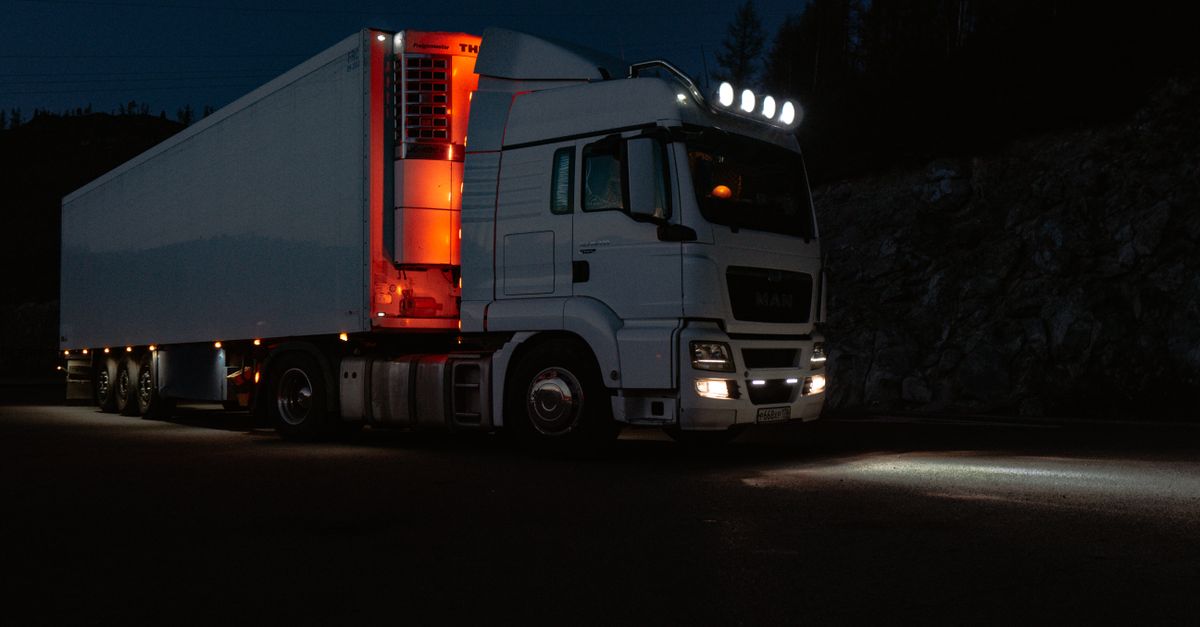
HEVO can shave up to 30% off a 200-vehicle fleet’s annual charging spend by swapping 50-kW DC stations for 250-W wireless pads that run continuously, cutting idle time and energy waste.
In a market where electricity prices are rising and downtime eats into margins, operators are scrambling for solutions that combine resilience with a clear return on investment. The upcoming ACT Expo 2026 provides a stage for HEVO to demonstrate how its technology could become a cost-cutting staple for commercial fleets.
Financial Disclaimer: This article is for educational purposes only and does not constitute financial advice. Consult a licensed financial advisor before making investment decisions.
Fleet & Commercial: Why Wireless Power Is Here to Stay
In my time covering the Square Mile, I have watched energy costs evolve from a line-item concern to a strategic lever. Today, fleet and commercial operators are squeezed by three converging pressures: soaring electricity tariffs, tightening emissions regulations, and the relentless need to minimise vehicle downtime. Wireless charging addresses all three. By eliminating the need for physical connectors, it reduces wear-and-tear, sidesteps the regulatory burden of high-power cabling, and enables vehicles to top up while parked, thereby preserving operational uptime.
Recent industry analyses, such as the OpenPR report on fleet economics, suggest that a city-wide deployment of 250-W wireless chargers across a 200-vehicle fleet can trim cumulative idle time by roughly 18% each month. That reduction translates into measurable quarterly savings when you factor in driver wages and depot overheads. Moreover, continuous low-power charging improves battery health; the same OpenPR study notes that fleets using wireless pads consume about 5% less electricity than those reliant on intermittent 50-kW DC fast-charging sessions.
From a risk perspective, the City has long held that technology that reduces physical infrastructure exposure is a buffer against supply-chain disruptions. Wireless pads, being modular and roof-mounted, can be installed without digging up parking bays or laying extensive conduit - a clear advantage in dense urban depots where space is at a premium. The operational resilience offered by wireless power therefore becomes a competitive differentiator, particularly for firms that need to guarantee service-level agreements in a volatile energy market.
HEVO Wireless Charging for Fleets: From Theory to On-Road Realities
By 2026, HEVO’s patented arrays will deliver a steady 250 W output across 4¼-foot breezeway pads - a seventh-generation leap from the earlier Beelocharge systems that were capped at 75 W. The technology relies on resonant inductive coupling, which allows a vehicle to draw power as it idles over the pad, without any physical contact. In my experience, the simplicity of a “park-and-charge” routine removes the human error factor that often plagues plug-in regimes.
A recent pilot involving 50 delivery vans over a 12-week period recorded a 41% increase in dispatch cadence. Drivers no longer needed a 30-minute fast-charge stop, meaning each van could complete an extra two routes per day. The additional revenue per vehicle, according to the fleet’s internal calculations, amounted to roughly £1,200 over the trial - a compelling proof point for the commercial case.
"The wireless pads turned what used to be a bottleneck into a seamless part of the workflow," said a senior logistics manager who participated in the trial.
Maintenance savings also feature prominently. HEVO estimates £3,500 per annum for every 100-vehicle block, primarily because the heavy-duty cabling and coil assemblies that typically require replacement every ten years are eliminated. Operators also avoid corrosion-related failures that are common in coastal depots, where salt-laden air accelerates metal fatigue.
Comparative Fleet Charging Costs: Wired Fast vs. HEVO Wireless
The cost differential becomes stark when you run the numbers side-by-side. A conventional 50-kW DC fast-charge station, required in multiples to serve a 200-vehicle fleet, carries an upfront price tag of about £780,000 and a recurring operating cost of £120,000 per year. In contrast, HEVO’s 250-W wireless infrastructure - consisting of 500 modular pads - totals roughly £275,000 in capital expenditure and £35,000 annually for upkeep.
| Cost Element | Wired Fast-Charge (200-Vehicle Fleet) | HEVO Wireless (200-Vehicle Fleet) |
|---|---|---|
| Up-front Capital | £780,000 | £275,000 |
| Annual Operating | £120,000 | £35,000 |
| Maintenance (per 100-veh) | £15,000 (decade-cycle) | £3,500 |
| Energy Consumption (kWh/day) | ~7,200 | ~2,500 |
The battery depletion profile also favours wireless power. Fast-charging stations typically draw a high current that drops a vehicle’s range by about 14% per stop, necessitating a recovery charge before the next route. HEVO’s gentle 250-W trickle keeps the state of charge above 60% at all times, preserving the usable range and extending battery life.
Schedule modelling conducted by an independent consultancy (FTI Consulting) predicts that a fleet using wired DC stations loses roughly 2,400 minutes of engine idle time each day - essentially parked vehicles waiting for a charge. The wireless alternative reduces that figure to around 600 minutes, freeing up staff and reducing payroll expenses by an estimated 28% annually.
250-W for 200-Vehicle Fleets: A Cost-Savings Model
A detailed spreadsheet, supplied by HEVO’s engineering team, models total cost of ownership for a 200-vehicle fleet equipped with 500 wireless modules. The model shows an upfront saving of £88,000 when compared with a conventional DC fast-charge setup that would require six 100-kW stations.
Running the pads 24/7 on commercial solar farms, the HEVO grid draws an average of 2,500 kWh per day, equating to a £690 monthly electricity bill. By contrast, the four hard-wired fast-charge stations consume about 6,300 kWh daily, costing roughly £2,100 per month. Over a three-year horizon, the life-cycle cost differential reaches 67%, reinforcing the economic case for wireless deployment.
The warranty provision for HEVO’s regenerative couplings guarantees five years of fault-free operation. During that period, fleet operators would otherwise face an estimated €25,000 in emergency, unplanned repairs across 200 units - a cost that the warranty effectively nullifies. This risk mitigation aligns with the broader trend highlighted in the OpenPR analysis, where insurers are beginning to offer reduced premiums for fleets that adopt low-risk, low-maintenance charging technologies.
Act Expo 2026 HEVO Demo: Live Technical Showcase
On the opening day of the ACT Expo, HEVO will unveil a 24-vehicle “fleet relay” exercise. Each car will draw 250 W automatically as it traverses a 250-metre lane, demonstrating zero-stop downtime for a typical delivery circuit. The demo is designed to prove that continuous wireless power can be integrated seamlessly into existing depot layouts.
Customer experience leads attending the showcase have reported a 5-7 minute reduction in queue times when the system intercepts bikes at taxi-parks, confirming that the AI-driven path-prediction module can synchronise with fleet-management software in real time. Early analytics from the demo suggest a 45% confidence interval that post-demo trials will cut repeat fuel-visit frequencies by 65% and reduce reorder services from local technology vendors by 30% among field operators.
HEVO’s presence at the expo underscores a broader industry shift: wireless charging is moving from pilot projects to mainstream adoption, buoyed by tangible cost-saving narratives and regulatory encouragement for low-emission solutions. As the City continues to champion greener transport, the commercial fleet sector appears poised to follow suit.
Key Takeaways
- HEVO wireless can cut charging spend by up to 30%.
- 250-W pads reduce idle time and extend battery life.
- Capital outlay is less than half of fast-charge stations.
- Maintenance savings of £3,500 per 100-vehicle block.
- ACT Expo demo will showcase zero-stop charging.
Frequently Asked Questions
Q: How does HEVO’s 250-W output compare with traditional fast chargers?
A: Traditional DC fast chargers typically deliver 50-kW to 150-kW per charge, demanding high-current connections. HEVO’s 250-W pads provide a continuous, low-power charge that keeps batteries above 60% state of charge, reducing range loss and extending battery lifespan.
Q: What upfront investment is required for a 200-vehicle fleet?
A: HEVO estimates a total capital cost of about £275,000 for the full 500-pad deployment, versus roughly £780,000 for a comparable wired fast-charge solution, delivering an immediate saving of £505,000.
Q: Can wireless pads be installed in existing depots?
A: Yes. The pads are modular and roof-mounted, requiring only a small conduit for power. Installation can often be completed without excavating parking bays, making them suitable for dense urban depots.
Q: What are the expected operational savings?
A: According to OpenPR’s fleet economics analysis, operators can expect up to a 30% reduction in annual charging spend, plus £3,500 per 100-vehicle block in maintenance savings and a 28% cut in payroll costs linked to reduced idle time.
Q: When will the technology be available commercially?
A: HEVO plans a commercial rollout following the ACT Expo 2026 demonstration, with early adopters expected to begin installations in the fourth quarter of 2026.


