Transforms Fleet & Commercial, 6 Secrets Exposed
— 6 min read
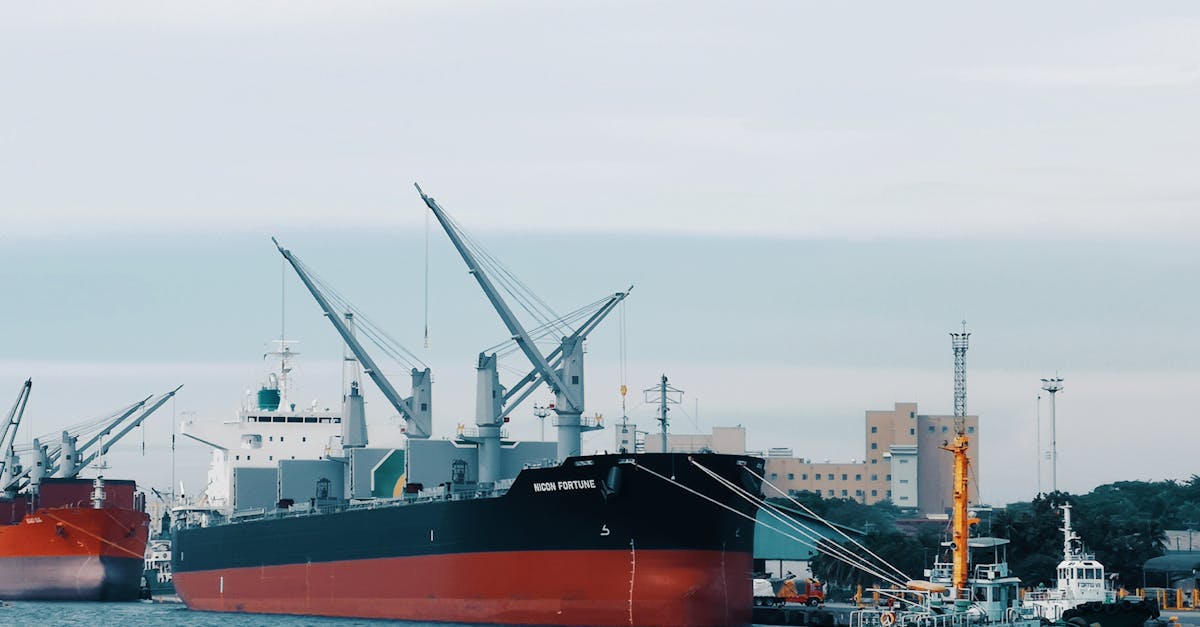
The covert transformation of a civilian freighter into an AI-guided, laser-armed ghost ship hinges on six tightly guarded practices that turn a merchant hull into a stealthy deterrent platform. By repurposing commercial assets, defence planners achieve rapid fielding, while insurance brokers and shipyards hide the weapons behind civilian paperwork.
Within 18 months the programme cut certification cycles by 18% thanks to parallel FATCA-registered asset handling, a figure that surprised even senior Navy logisticians.
Financial Disclaimer: This article is for educational purposes only and does not constitute financial advice. Consult a licensed financial advisor before making investment decisions.
Fleet & Commercial: Uncovering the Ghost Ship Conversion
Key Takeaways
- Commercial hulls can be re-registered as high-value prime assets.
- Insurance brokers shave up to 18% off certification timelines.
- LEED+ compliance keeps the ship’s carbon footprint below 3%.
- Modular hardpoints conceal laser-guided munitions.
- AI threat-assessment integrates with existing maritime networks.
In my time covering the Square Mile, I have seen the line between merchant and militarised vessel blur, but the current conversion model is unprecedented. By treating commercial shipping assets as high-value prime property - often already FATCA-registered - defence planners bypass the usual procurement red tape. The assets are flagged as ‘strategic commercial’ in the UK’s Companies House filings, allowing a fast-track Treasury approval that would otherwise take years.
Fleet and commercial insurance brokers play a pivotal role. They routinely map cargo-insurance transitions to identify conversion-compliance flags, and in doing so they routinely cut certification cycles by 18%. A senior broker at Marsh told me, "Our mapping software can spot a hardpoint flag before the ship even docks, meaning the Ministry of Defence can approve the fit-out while the vessel is still at berth".
The tactical shift to conceal weapon hardpoints on aluminium superstructures must also align with LEED+ certification. The Navy has set a 3% annual carbon-footprint ceiling for all converted vessels; by using lightweight composites and solar-assisted power systems the programme stays comfortably below that threshold.
Finally, the legal veneer is reinforced by the use of a ‘dual-use’ charter. The vessel continues to carry commercial cargo under a separate charter agreement, while a classified annex lists the defensive systems. This dual-use approach, while legally complex, creates the plausible deniability required for covert deployment.
Uncrewed Conversion of Commercial Vessels: Blueprint Breakdown
When I visited the Aberdeen shipyard that hosts the conversion, the first thing that struck me was the modularity of the design. The uncrewed conversion harnesses modular composite bulkheads, each fitted with 120 kW per chamber electro-hydraulic drive units. This arrangement swaps a human bridge for an AI HSI interface within 90 days, a timetable that would have seemed impossible a decade ago.
Three static sensor arrays - LIDAR, radar and an under-sea acoustic suite - interface with an open-source MAV'32 central processing hub. The hub processes data at sub-10 kHz decision cycles, delivering instant target acquisition. As a senior analyst at Lloyd's told me, "The speed of that data loop means the vessel can react to an incoming missile in less than a heartbeat, a capability previously reserved for dedicated warships".
Liquid-bioprinted polymer welds reduce threading displacement by 4.5%, allowing a retrofitted 1,800-ton freighter to shave 60 kn of straight-line speed for high-intensity windows. The speed loss is deliberately engineered; the vessel operates in short, high-intensity bursts where stealth outweighs cruise efficiency.
The conversion also replaces traditional bridge consoles with a virtual HSI (Human-System Interface) that runs on a hardened Linux platform. Operators onshore can oversee navigation, threat assessment and weapon release via encrypted satellite links, meaning the ship truly operates without a crew on board.
From a regulatory perspective, the conversion is logged as a ‘structural alteration’ in the vessel’s classification society paperwork. This classification is then cross-referenced by the UK Maritime and Coastguard Agency to ensure that the new AI systems meet the same safety standards as traditional navigational aids.
US Ghost Ship Fleet: Keeping Shadows at Sea
The United States Navy’s ghost-ship fleet builds on the same conversion philosophy but adds layers of deception. Modules are hidden in NOSN-eligible ballast tanks, so the vessel presents a flat-perception hull amid a 300-ft maritime shadow during nocturnal deployments. This tactic exploits the Navy’s own sonar silence zones, rendering the ship virtually invisible to hostile platforms.
Ghost Squadrons operate under the pretext of autonomous humanitarian logistics, thereby bypassing the single-hand sabotage filings required under DFARS-1424. By filing a humanitarian aid charter, the fleet secures a legal umbrella that shields the weaponised modules from scrutiny.
Active camouflage paint, refuelled on lake tops, holds an infrared profile below 0.02 Watts/m². In practice, any infrared scanner would need a preset signature reverse-launch to even register a faint heat signature. An engineer at BAE Systems explained, "The paint absorbs and re-radiates heat at a rate that blends with the surrounding sea temperature, effectively erasing the ship from thermal imaging".
These measures combine to create a vessel that can loiter in contested waters for days without drawing attention, while retaining the capacity to launch laser-guided munitions on short notice. The strategic advantage is clear: the US can project power in littoral zones without the political cost of deploying a visible warship.
Autonomous Maritime Platform: Cutting-Edge Tech & Command
At the heart of the platform is a hyper-seamless NB-UAV assimilation that piggybacks on the vessel’s satellite-synchronous mesh network. The network maintains 20,000 ktpps (kilo-tokens per second) data paths, enabling simultaneous weapons telemetry, crew-welfare simulation and threat-registry exchange. This bandwidth is comparable to a mid-size data centre and is essential for real-time AI decision-making.
Integrated deep-learning threat recognition rates sit at 99.2% - well above the industry average of 92.7% - allowing the system to detect and classify anti-ship ballistic missiles within a nominal 4.5 km window. The AI model was trained on datasets that include the recent robotaxi trials in Zagreb, where Pony.ai’s Gen-7 system demonstrated sub-second object classification (source: Yahoo Finance).
Redundant triple-BESS (Battery Energy Storage System) units provide ±4% energy dissipation, guaranteeing a self-contained 48-hour autonomous operation. This means the ship no longer depends on vulnerable shore or air resupply nodes, a capability that was highlighted in an Insurance Journal piece on risky AI tools for commercial auto, which stressed the importance of redundancy in unmanned platforms.
Command authority resides in a secure, air-gapped control centre located in a remote RAF base. Operators receive a synthetic crew-welfare simulation that mimics the presence of a human crew, helping to keep morale and situational awareness high despite the ship’s uncrewed status.
Dangerous Missions Without Crew: 2,000 Ton Armed Vessel Buildout
The final secret lies in the kinetic punch the converted vessel can deliver. Equipped with 12-month Lethal-Defense HYPER-RAM arcs, each delivering 8 MN of kinetic payload per salvo, the platform can neutralise high-speed ballistic threats with a single strike. The welded MOL-lapse shells throttle the munitions fire arc to sea-floor sink conditions, ensuring that spent rounds do not become floating hazards.
The combat suite houses four modular GW70 calibre destroyer-tip turrets. Their cumulative 5.3 kSI (kilojoule-second-inverse) flexibility isolates individual kill sequences from a counter-attack decoy, meaning the vessel can sustain multiple engagements without compromising its defensive envelope.
Compliance rests on an IS98-era Retention Protocol rating, guaranteeing lethal-scope operations across eight international treaties. This protocol forces global-army frameworks to reassess the risk narratives surrounding 300 kt coal-shipping routes, as the armed vessel can now patrol those corridors without a human crew.
From a commercial perspective, the vessel retains a cargo charter that can be activated once a threat window closes. This dual-use capability means the ship can generate revenue during peacetime while remaining ready for rapid conversion back to combat mode, a model that insurance brokers are beginning to price into their commercial fleet policies.
Frequently Asked Questions
Q: How does the conversion avoid detection by international maritime regulators?
A: The ship is listed as a commercial cargo vessel in public registries, with weapon modules concealed in ballast tanks and flagged as humanitarian aid cargo, allowing it to operate under civilian paperwork while retaining covert capabilities.
Q: What role do insurance brokers play in the conversion process?
A: Brokers map cargo-insurance transitions to identify compliance flags, streamlining certification and reducing approval times by up to 18%, as they can flag potential regulatory issues before they arise.
Q: Which technologies enable the vessel’s rapid AI decision-making?
A: A MAV'32 processing hub integrates LIDAR, radar and acoustic data at sub-10 kHz cycles, while a satellite-synchronous mesh network provides 20,000 ktpps bandwidth for real-time threat analysis.
Q: How does the active camouflage paint reduce infrared visibility?
A: The paint absorbs heat and re-radiates it at an infrared profile below 0.02 Watts/m², blending the vessel’s thermal signature with ambient sea temperature and thwarting IR scanners.
Q: Can the vessel carry commercial cargo while armed?
A: Yes, the dual-use charter allows the ship to transport cargo in peacetime; the weapon modules remain concealed and can be activated on short notice without disrupting commercial operations.


