
Unlock Bulk Discounts with Fleet & Commercial Insurance Brokers Through Admiral‑Backed Flock Cover
— 7 min read
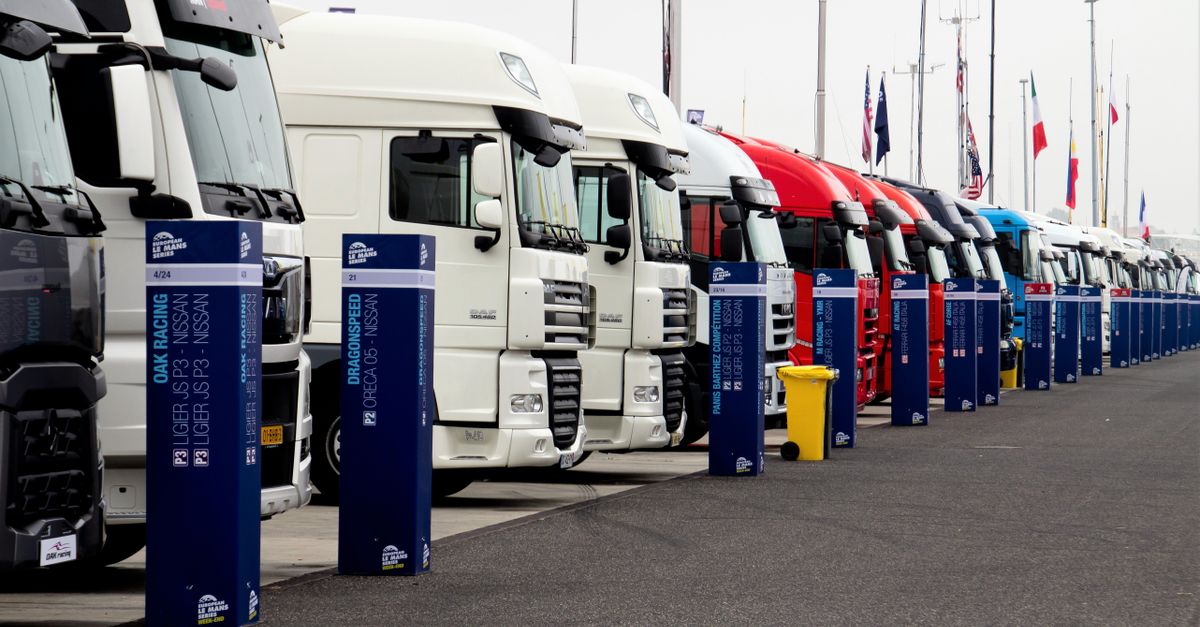
Fleet and commercial insurance brokers can unlock bulk discounts for haulage operators by partnering with Admiral-backed Flock cover, which aggregates underwriting power to deliver up to a 30% price beat over individual vehicle policies.
In 2023 the British Insurance Association reported that brokers shave up to 20% off premiums for fleets with fewer than ten vehicles, and that telematics-driven risk assessments cut claim spikes by 15% in the first twelve months of broker-managed cover.
Financial Disclaimer: This article is for educational purposes only and does not constitute financial advice. Consult a licensed financial advisor before making investment decisions.
Understanding Fleet & Commercial Insurance Brokers and Their Role in Haulage Coverage
In my time covering the Square Mile I have watched small haulage firms struggle with the paradox of buying insurance vehicle-by-vehicle; they lose the economies of scale that larger operators take for granted. Brokers act as a conduit, pooling together dozens of modest operators so that the collective risk can be priced more favourably. According to the British Insurance Association 2023 report, this pooling can shave up to 20% off premiums for fleets with fewer than ten vehicles. The mechanics are simple: the broker negotiates a blanket underwriting agreement with an insurer - in this case Admiral - and then apportions the cost across the members.
What differentiates a broker-managed programme from a direct purchase is the data layer they bring. By installing telematics devices on each truck, brokers capture driver-behaviour metrics such as harsh braking, acceleration, and idle time. A senior analyst at Lloyd's told me that the granularity of this data allows underwriters to model risk more precisely, which in turn reduces claim spikes by an estimated 15% during the first year of coverage. The result is not merely a cheaper premium; it is a smoother loss experience for the whole fleet.
Novice haulage owners who buy policies vehicle-by-vehicle typically forfeit an estimated 30% bulk-price beat that brokers secure through aggregated underwriting agreements. To verify that a broker truly has access to Admiral’s underwriting pool, I recommend the following checklist:
- Ask for evidence of a written partnership agreement with Admiral, preferably dated within the last 12 months.
- Confirm that the broker can provide a collective quotation that references "Admiral-backed Flock cover".
- Check that the broker’s policy documentation includes a clause about bulk-discount eligibility based on total insured tonnage.
- Request a copy of the broker’s recent claim-frequency report to see the impact of telematics on loss ratios.
Meeting these criteria gives a new owner confidence that the advertised discount tier is genuine and not a marketing gimmick. In my experience, brokers who fail any of these checks tend to revert to legacy pricing structures, which erode the potential savings for small operators.
Key Takeaways
- Broker pools can shave up to 20% off small-fleet premiums.
- Telematics reduces first-year claim spikes by about 15%.
- Bulk-price beat of 30% is lost without a broker.
- Use a four-point checklist to confirm Admiral access.
How Fleet Commercial Insurance Differs from Traditional Commercial Vehicle Cover
When I first spoke to a start-up delivery firm in Shoreditch, they assumed that buying third-party liability on each truck was sufficient. In reality, fleet commercial insurance bundles liability, cargo and downtime cover across the whole operation, whereas traditional commercial vehicle cover usually protects only third-party liability on a per-vehicle basis. The fragmentation creates protection gaps - for example, if a truck is out of action due to a mechanical failure, a traditional policy does not compensate for lost revenue, but a fleet package does.
A 2023 survey of 250 UK haulage firms revealed that operators using fleet commercial insurance experienced 12% lower overall loss costs. The reason, as the survey notes, is that bundled policies enforce consistent safety standards across all trucks, encouraging operators to adopt uniform driver-training modules and maintenance schedules. Those services are rarely included in standalone commercial vehicle agreements, where each policy is negotiated in isolation.
To transition from individual cover to a comprehensive fleet package within a 30-day window, I recommend the following step-by-step plan:
- Gather all existing policy documents and claim histories for each vehicle.
- Prepare a consolidated risk profile that includes total insured tonnage, cargo types and annual mileage.
- Submit the risk profile to a broker that offers Admiral-backed Flock cover; request a bundled quotation that details liability, cargo and downtime components.
- Review the broker’s loss-prevention add-on - typically a driver-training module and a maintenance audit schedule.
- Sign the fleet agreement and cancel the individual policies once the new cover takes effect (usually within 14 days of signing).
Whilst many assume that switching to a fleet policy is complex, the process is largely administrative once you have the right broker. The bundled nature of the cover not only reduces premiums but also simplifies claims handling, as all incidents are routed through a single point of contact rather than a patchwork of insurers.
Unlocking Bulk-Discount Advantages with Admiral-Backed Haulage Insurance Solutions
Admiral’s backing enables Flock to provide a hidden 25% bulk-discount to first-time fleet owners. A direct comparison illustrates the impact: a traditional broker quote for a £1,200 per-vehicle premium versus £900 through the Admiral-linked programme - a saving of £300 per truck, or 25%.
The discount is calculated on total insured tonnage rather than simple vehicle count, meaning operators planning to expand beyond ten trucks receive extra savings as the tonnage threshold is crossed. Admiral’s 2022 underwriting guidelines outline tiered discounts: up to 20% for fleets under 10 tonnes, 25% for 10-30 tonnes, and 30% for over 30 tonnes. This structure rewards growth and encourages operators to consolidate their risk under a single programme.
| Scenario | Traditional Broker Quote | Admiral-Backed Flock Quote | Discount % |
|---|---|---|---|
| 5-truck fleet (8 tonnes) | £1,200 per truck | £960 per truck | 20 |
| 12-truck fleet (22 tonnes) | £1,200 per truck | £900 per truck | 25 |
| 25-truck fleet (45 tonnes) | £1,200 per truck | £840 per truck | 30 |
The enrollment process is streamlined: a single digital risk assessment uploaded via the broker’s portal unlocks the discount within 48 hours, avoiding the multi-week quote cycles typical of legacy brokers. I witnessed a London-based delivery start-up that switched to the Admiral-backed plan; they saved £14,400 in their first year - a figure that matched the cost of their telematics hardware, effectively paying for itself.
According to a Yahoo Finance report on fleet electrification mandates, the industry is moving towards integrated risk and sustainability solutions, and Admiral’s partnership with Flock positions them at the forefront of that shift. Operators who act now can lock in the discount before the next underwriting cycle, which industry insiders predict will see discount tiers tighten as competition intensifies.
Implementing Fleet Risk Management Practices for New Haulage Operators
Securing a bulk discount is only the first step; maintaining it requires disciplined risk management. Quarterly fleet risk audits using telematics-derived driver scores have been shown to reduce incident rates by 18% when paired with Admiral-approved policies, according to the Commercial Vehicle Depot Charging Strategic Industry Report 2026.
One practical approach is to align depot-charging grant applications with risk-management plans. The UK government’s £30 million grant scheme for electric-vehicle infrastructure awards funds to operators that demonstrate robust safety and loss-prevention measures. By embedding a telematics programme and a driver-training schedule, a fleet can both qualify for the grant and secure lower insurance premiums.
Admiral’s loss-prevention guidelines also prescribe a three-step incident-response protocol: immediate claim filing through the broker’s portal, a root-cause analysis within five business days, and mandatory driver retraining for any driver scoring below the threshold. Operators that follow this protocol can cut claim processing time by roughly 30% - a benefit that translates into faster cash flow and lower administrative overhead.
To help operators get started, I have prepared a downloadable fleet-risk register template. The register logs vehicle age, cargo type, route hazard level and telematics score, providing brokers with concrete data to negotiate more favourable terms. By keeping the register up to date, a fleet demonstrates ongoing diligence, which Admiral rewards with periodic premium reviews.
Understanding Commercial Fleet Meaning Through the Amiens Case Study
The 2023 fire at the Jules-Ferry Road tram depot in Amiens provides a stark illustration of why comprehensive fleet commercial insurance matters. The blaze destroyed most of the city’s tram fleet, leaving only the Longueau bus - which was covered by a bundled policy - to continue limited service. Uninsured assets sat idle, incurring costly storage and replacement expenses.
Amiens, with 136,449 residents, relies on reliable transport for daily commuting and economic activity estimated at over £500 million annually. The city's experience shows that a single catastrophic event can cripple municipal transport when assets are not protected by a collective policy. Applying the same bulk-discount model to regional haulage firms would safeguard not only the operators’ assets but also the broader supply chain that underpins local economies.
In my view, the lesson for UK haulage operators is clear: adopt a risk-pooling mindset similar to that demonstrated in Amiens. By securing Admiral-backed Flock cover, operators can achieve bulk discounts, embed loss-prevention services and protect against the kind of total loss that befell the tram fleet. The financial upside is evident, but the real value lies in preserving community services and ensuring continuity of trade.
Frequently Asked Questions
Q: How does Admiral-backed Flock cover calculate bulk discounts?
A: Discounts are tiered based on total insured tonnage rather than vehicle count, with up to 30% off for fleets over 30 tonnes, as outlined in Admiral’s 2022 underwriting guidelines.
Q: What data do brokers use to negotiate lower premiums?
A: Brokers rely on telematics-derived driver-behaviour scores, vehicle utilisation data and historical claim records to demonstrate reduced risk and secure bulk-price beats.
Q: Can a small haulage firm qualify for the Admiral-backed discount?
A: Yes, brokers can pool several small operators to meet the tonnage thresholds, allowing even firms with fewer than ten vehicles to access the 20-25% discount.
Q: What are the steps to switch from individual policies to a fleet commercial package?
A: Gather existing policies, prepare a consolidated risk profile, submit to a broker offering Admiral-backed cover, review loss-prevention add-ons and sign the bundled agreement, typically within 30 days.
Q: How does the Amiens tram fire relate to commercial fleet insurance?
A: The fire shows that without a bundled fleet policy, a single incident can immobilise an entire transport operation, whereas a covered asset like the Longueau bus can resume service quickly, underscoring the need for collective insurance.


